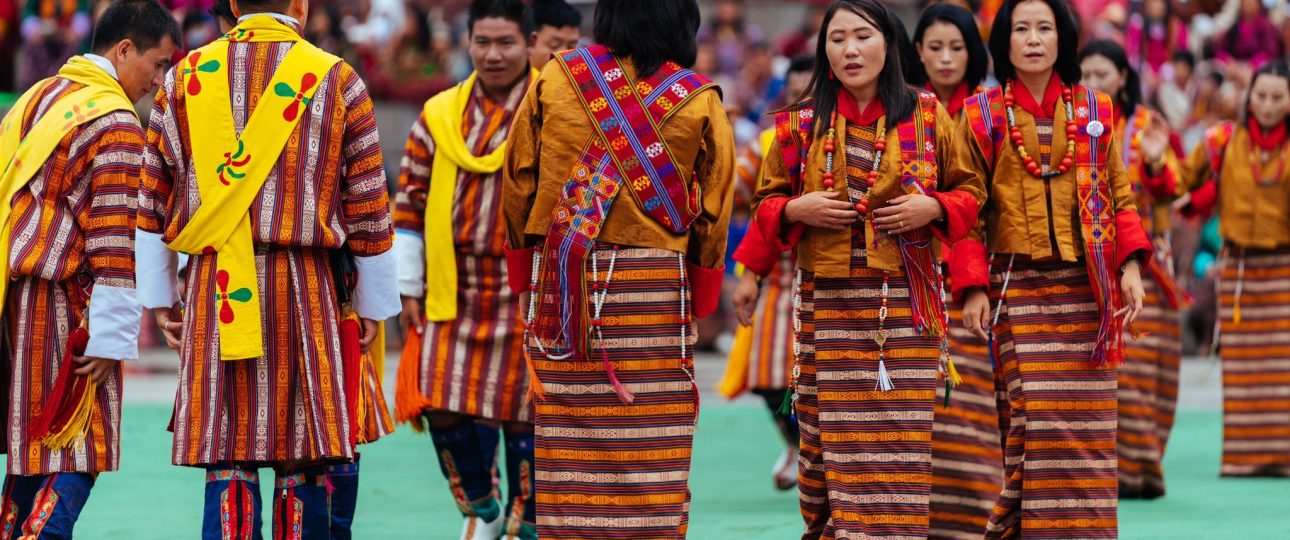
The national dress of Bhutan, the Gho for men and the Kira for women, is one of the most distinctive aspects of Bhutanese culture. It is not only a form of attire but also a symbol of unity, identity, and pride for the Bhutanese people.
Origins in the 17th Century
The tradition of wearing a national dress dates back to the 17th century, during the time of Zhabdrung Ngawang Namgyel, the spiritual and political leader who unified Bhutan. To foster a sense of national identity and cultural cohesion, he decreed that all Bhutanese should wear the Gho and Kira, especially during official gatherings, religious events, and in administrative offices. This marked the beginning of Bhutan’s unique dress code that still defines the nation today.
Evolution Through Time
Originally, the Gho and Kira were made from handwoven wool and cotton, dyed with natural colors derived from plants and minerals. Over time, weaving techniques advanced, and more intricate patterns and colors were introduced, each representing different regions and communities within Bhutan. Today, while machine-woven fabrics are common, traditional handwoven textiles remain highly valued and are considered a sign of prestige and cultural appreciation.
Symbolism and Cultural Importance
The national dress represents equality and cultural pride. It eliminates social barriers by ensuring that everyone, from farmers to officials, shares a similar style of dress, though the quality and fabric may vary. The colors, patterns, and accessories also hold symbolic meanings, often linked to status, occasion, and regional identity.
- Gho (for men): A knee-length robe tied at the waist with a woven belt called a Kera, usually worn with long socks and leather shoes or boots.
- Kira (for women): An ankle-length dress, usually handwoven, secured with silver or gold brooches called Koma, and topped with a jacket known as a Toego.
Legal and Social Significance
In 1989, the Bhutanese government reinforced the importance of the national dress through the Driglam Namzha policy, which requires citizens to wear the Gho and Kira in schools, government offices, and during official events. This policy not only preserves cultural heritage but also strengthens the country’s Gross National Happiness philosophy, emphasizing cultural preservation as a pillar of national well-being.
Modern Adaptations
Today, Bhutanese designers are blending traditional styles with modern trends, creating elegant yet contemporary versions of the Gho and Kira that appeal to the younger generation. Despite these innovations, the essence of the national dress remains unchanged, continuing to symbolize the unity, tradition, and pride of the Bhutanese people.